
Gravel Driveway Calculator
A 12 ft x 50 ft driveway with a 4 in base and a 2 in top layer needs about 12 cubic yards, or 18 tons, of gravel once you add 10% for compaction. Enter your own size to get cubic yards, tons, truckloads and cost.
Calculate my driveway See the formula
By the CalcGravel Team · Last updated · Method and sources
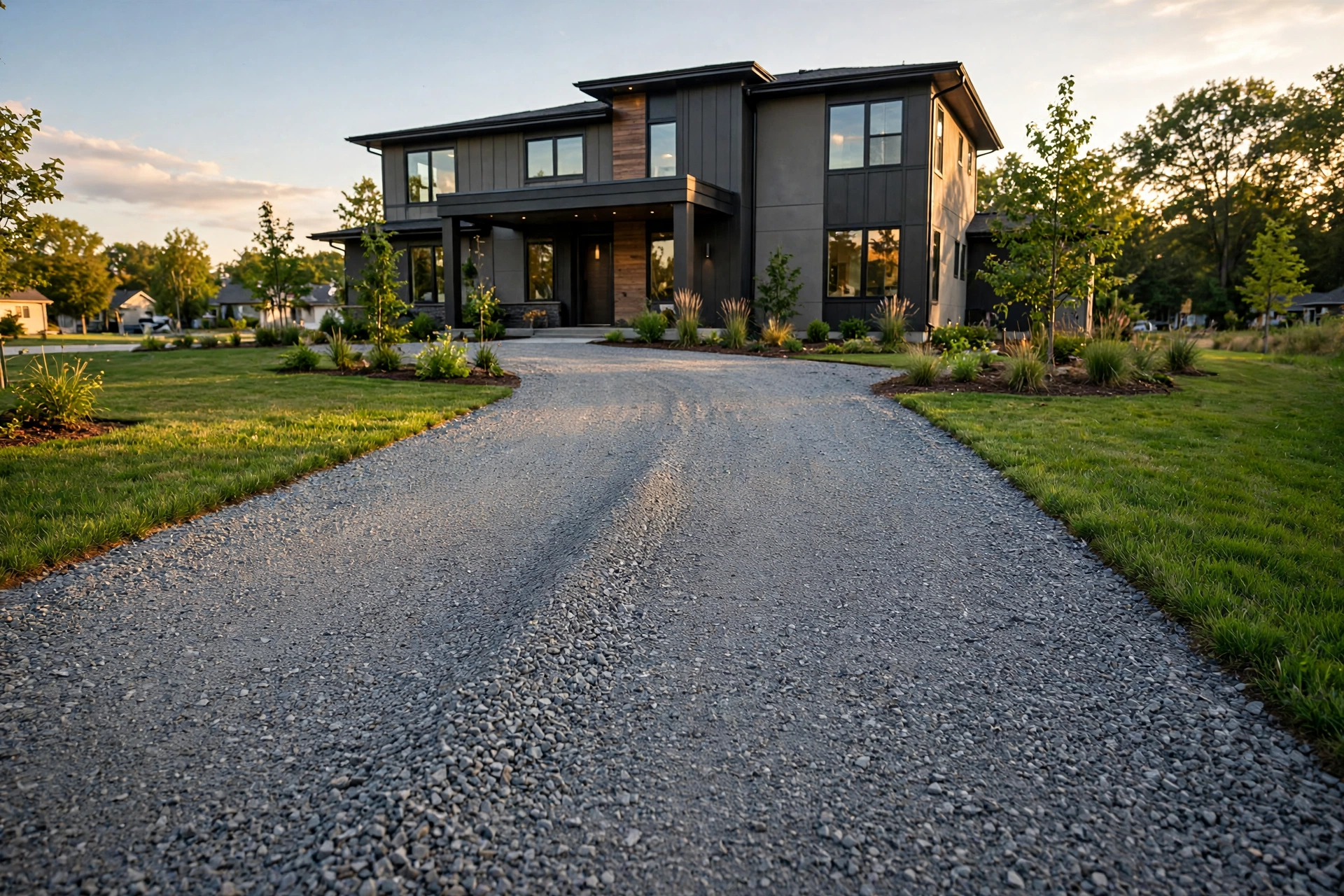
- Formula: length (ft) x width (ft) x depth (in) / 12 / 27 = cubic yards. Multiply by about 1.4 to 1.5 for tons.
- Typical build: 4 in compacted base + 2 in top layer. Heavy vehicles or soft soil need more.
- 12 x 50 ft driveway: about 12 cubic yards (18 tons) with 10% extra.
- 100 ft driveway (12 ft wide): about 24 cubic yards (36 tons).
- Stone cost: roughly $20 to $45 per ton before delivery, so $720 to $1,610 of stone for a 12 x 100 ft driveway.
Gravel driveway calculator
This driveway gravel calculator works as a gravel calculator for driveways of any size. It handles a base layer and a top layer separately, then gives you cubic yards, tons, truckloads, fabric and stone cost. Use Estimate gravel to find how much to order. Use How far will my gravel go? if you already have a number of tons.
Base layer
Top layer
Extras
Estimates only. Weight per cubic yard changes with stone type and moisture, so confirm tons per yard with your supplier before ordering. The calculator doubles as a gravel driveway cost calculator: enter your local price per ton.
How much gravel do I need for a driveway?
Short answer: a 12 x 50 ft driveway needs about 12 cubic yards, or 18 tons, with a 4 in base and a 2 in top layer plus 10% extra.
To calculate gravel for a driveway, multiply length by width by depth to get cubic feet, divide by 27 to get cubic yards, then multiply by the stone’s weight per cubic yard to get tons.
Tons = cubic yards x tons per cubic yard
Order = result x (1 + compaction %)
Add 10% to 20% for compaction. Loose gravel from the truck settles when you roll it, so a layer you spread 6 inches deep ends up about 5 inches thick.
Gravel needed for common driveway sizes
| Driveway | Size (width x length) | Area | Cubic yards | Tons | Truckloads | Stone cost |
|---|---|---|---|---|---|---|
| Single car | 10 x 20 ft | 200 sq ft | 4.1 | 6 | 1 | $120 to $270 |
| Double car | 20 x 20 ft | 400 sq ft | 8.1 | 12 | 1 | $240 to $540 |
| Short rural | 12 x 50 ft | 600 sq ft | 12.2 | 18 | 2 | $360 to $810 |
| Rural | 12 x 100 ft | 1,200 sq ft | 24.4 | 36 | 3 | $720 to $1,610 |
| Long rural | 12 x 200 ft | 2,400 sq ft | 48.9 | 72 | 6 | $1,430 to $3,230 |
| Farm or acreage | 12 x 300 ft | 3,600 sq ft | 73.3 | 108 | 9 | $2,150 to $4,840 |
How much gravel for a 100 ft driveway? A rule of thumb for any length
For a 12 ft wide driveway, every inch of depth over 100 ft takes about 3.7 cubic yards, or 5.2 to 5.6 tons of crushed stone, before the extra for compaction. Multiply by your total depth in inches and add 10%.
How wide should a gravel driveway be?
A typical gravel driveway width is 10 to 12 ft for one car and 18 to 24 ft for two. Add a few feet at turns and where cars pass. Check local rules if emergency vehicles need access. Wider driveways need more stone, so enter your real width in the calculator.
How deep should a gravel driveway be?
Short answer: use a 4 in compacted base plus a 2 in top layer for cars on firm soil. Use 6 in plus 3 in for heavy vehicles, and add fabric and a deeper base on soft ground.
The right depth depends on your soil and what drives on it. The base does the structural work. The top layer is only a wear surface.
| Situation | Base layer | Top layer | Fabric |
|---|---|---|---|
| Cars on firm soil | 4 in | 2 in | Recommended |
| Trucks, RVs, heavy loads | 6 in | 3 in | Yes |
| Soft, clay or wet soil | 8 to 12 in, in layers | 2 to 3 in | Yes, before any stone |
| Resurfacing an old driveway | None | 2 to 3 in | No |
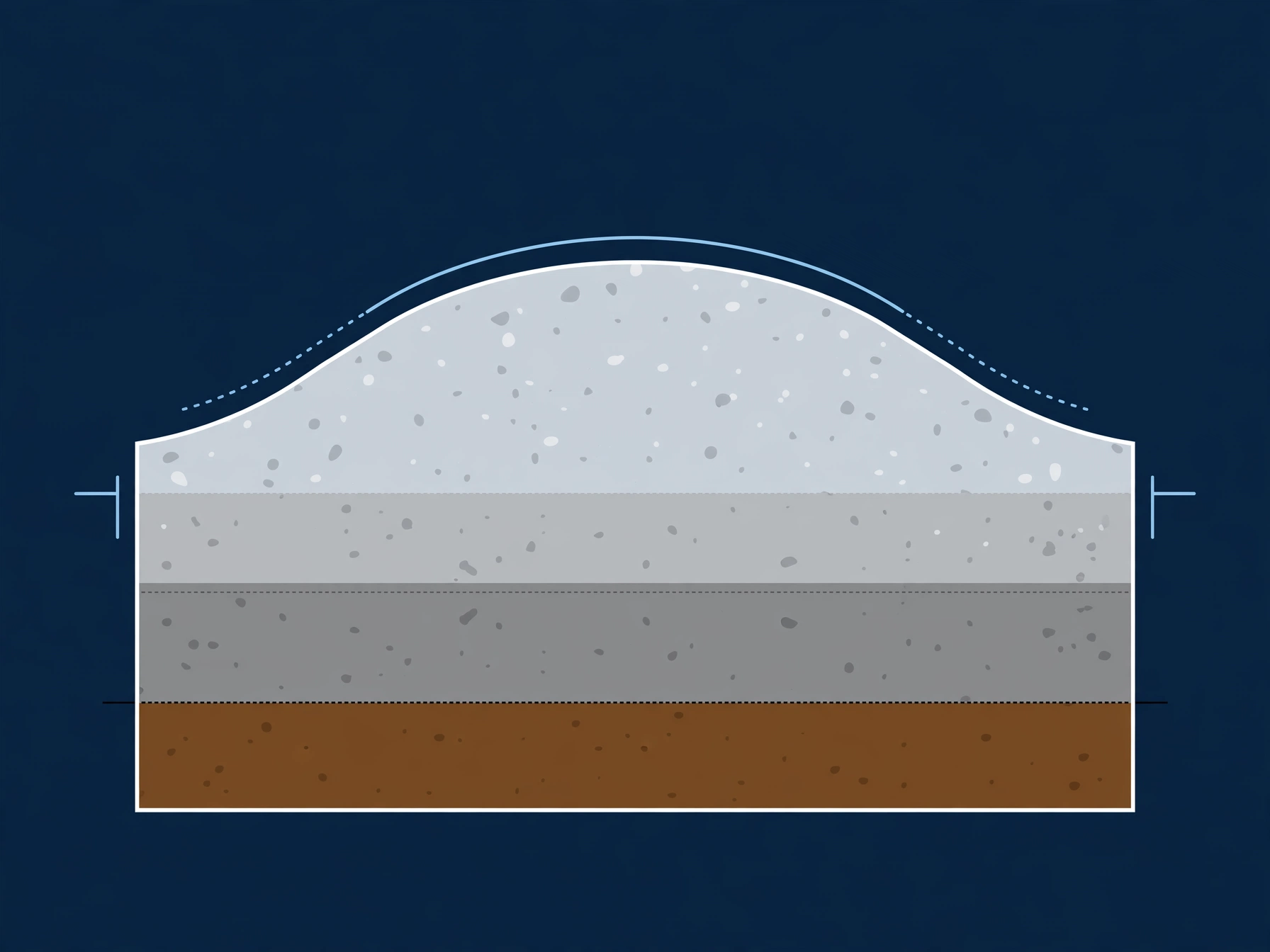
The layers of a gravel driveway
Gravel driveway layers matter more than the stone you see on top. A driveway that lasts is built in layers, bottom to top:
- Prepared ground. Topsoil and roots removed, shaped with a slight crown so water runs off, then compacted.
- Fabric (geotextile) on soft or wet ground, to keep the stone and soil apart.
- Base layer of crusher run or similar stone with fines, compacted in lifts of about 3 to 4 inches.
- Top layer of 3/4 in crushed stone or #57 stone, 2 to 3 inches.
Keep the top layer thin. More than about 3 inches of loose stone shifts under tires and leaves ruts. For other projects see our gravel depth guide.
Best gravel for a driveway: which stone for each layer?
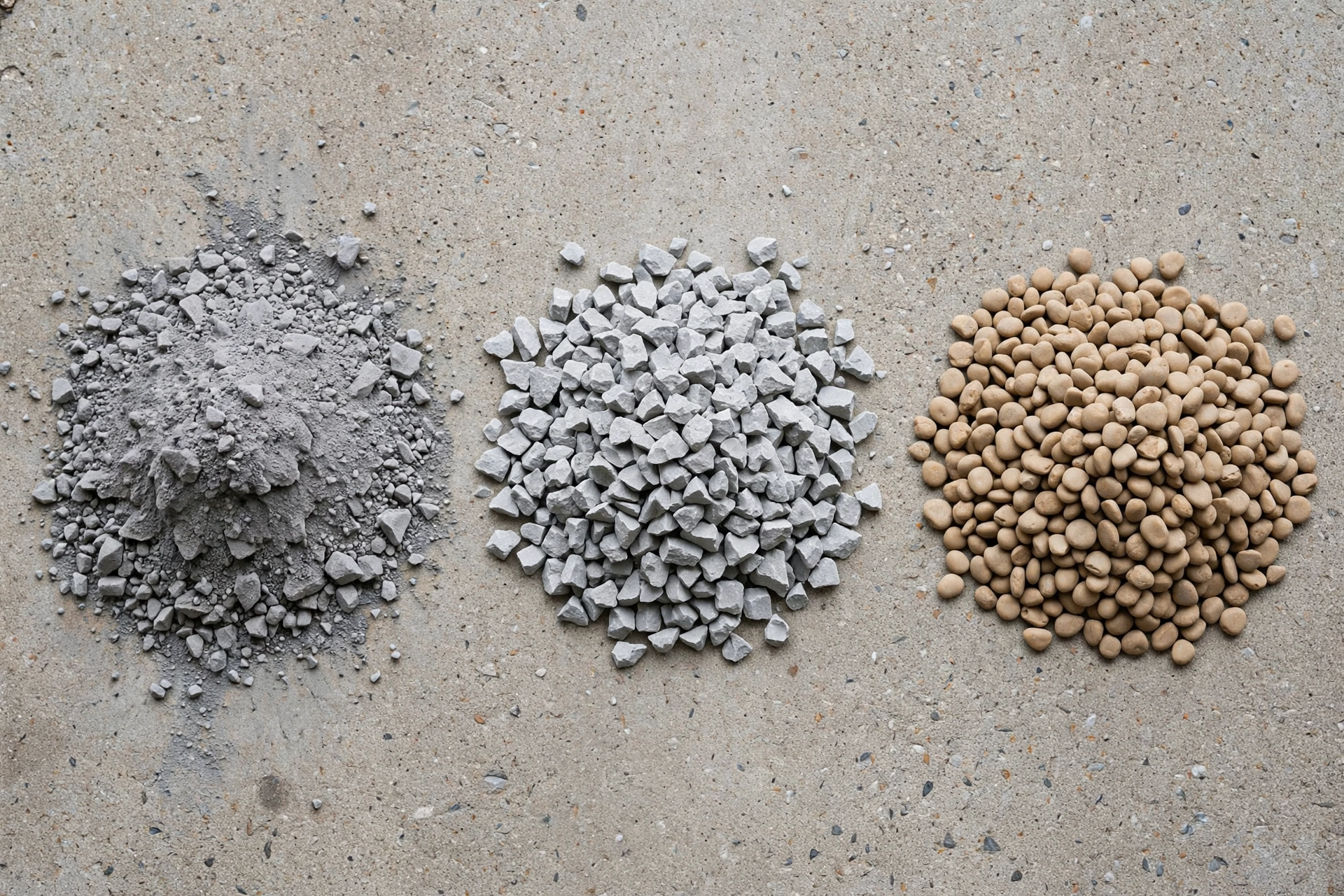
The best gravel for driveway use is angular crushed stone, because it locks together when compacted. Round stone does not. Clean stone with no fines stays loose, so installers use a mix with fines for the base and a clean 3/4 in stone for the surface.
- Base: crusher run, road base or dense graded aggregate.
- Top: 3/4 in crushed stone, or #57 stone.
- Soft ground: larger #3 stone or pit run under the crusher run.
Read more in crusher run and road base explained and pea gravel vs crushed stone.
Driveway gravel size chart
What size gravel for a driveway? Use crusher run for the base and 3/4 in crushed stone or #57 for the top. The chart shows typical sizes.
| Stone | Typical size | Use on a driveway | Why |
|---|---|---|---|
| Crusher run (also sold as road base, DGA, GAB, 21A, #411 or ABC, depending on region) | Stone up to about 3/4 to 1 in, mixed with fines | Base layer | The fines lock the stone together into a firm, drainable base |
| #3 stone | About 1 to 2 in | Sub-base on soft ground | Spreads the load and helps drainage |
| #57 stone | About 1/2 to 1 in | Top layer over a base | Angular, clean, drains well. On its own it stays loose |
| 3/4 in crushed stone | About 3/4 in | Top layer | Angular edges stay in place under tires |
| #8 stone | About 3/8 in | Fine surface or top-up | Smoother, but needs a firm base |
| Pea gravel | About 1/4 to 3/8 in, rounded | Paths, not driveways | Rolls under tires and spreads into the lawn |
Names and size limits vary by region and supplier. When you order, describe it: “crusher run with fines for a compacted driveway base”. See also our gravel sizes, weights and best uses guide.
Can you use pea gravel for a driveway?
Rarely. A pea gravel driveway looks good at first, but round pea gravel shifts under tires, leaves ruts and spreads into the lawn. It works for walkways and light use. Our pea gravel guide covers where it does fit.
Tons vs cubic yards: how much does a yard of gravel weigh?
Short answer: a cubic yard of crushed stone weighs about 1.2 to 1.7 tons, and 1.4 is a common planning figure. One ton is about 0.6 to 0.8 cubic yards.
Suppliers usually price by the ton, but some sell by the yard. Ask which one yours uses and ask for their tons per cubic yard figure.
| Material | Tons per cubic yard | Pounds per cubic yard |
|---|---|---|
| Crusher run / road base | 1.5 (range 1.4 to 1.7) | about 3,000 |
| Dense graded aggregate | 1.6 (range 1.5 to 1.7) | about 3,200 |
| #57 and 3/4 in crushed stone | 1.4 (range 1.2 to 1.5) | about 2,800 |
| Pea gravel | 1.3 (range 1.2 to 1.5) | about 2,600 |
For a full conversion between the two, use our yards to tons calculator. To work out volume first, try the cubic yard calculator or the cubic feet calculator.
How much does a gravel driveway cost?
Short answer: the stone for a 12 x 50 ft driveway usually costs $360 to $810 before delivery. A contractor typically charges more, often $1 to $3 per square foot for a basic job.
The cost of a gravel driveway starts with the stone, and stone price depends on the type and your region. Crusher run and road base are often the cheapest, and #57 and similar clean stone cost a bit more. Delivery is extra. See current prices in our gravel cost per ton guide.
Base stone
About 12 tons of crusher run for a 12 x 50 ft driveway.
Often $15 to $35 per ton
Top stone
About 6 tons of #57 or 3/4 in stone for the same driveway.
Often $25 to $50 per ton
Fabric and extras
600 sq ft is about 67 sq yd of geotextile fabric. Delivery, grading and edging are extra.
Delivery often $50 to $200 per load
How much does a 100 ft gravel driveway cost?
A 12 x 100 ft driveway needs about 36 tons. At $20 to $45 per ton that is $720 to $1,610 for the stone, before delivery. Add excavation, fabric, edging and labor if you hire it out. The table in the section above shows other lengths.
Gravel driveway cost per square foot
| Build | Stone cost per sq ft | Professional installation (typical quotes) |
|---|---|---|
| 4 in base + 2 in top | $0.60 to $1.34 | About $1 to $3 per sq ft for a basic job |
| 6 in base + 3 in top | $0.90 to $2.02 | Up to $4 to $10 per sq ft with excavation, fabric and drainage |
Stone ranges are typical prices reported by supplier and cost guides reviewed on 20 October 2026. Installation ranges vary a lot by region and site. Prices are not quotes, so get a local one.
How much is a truckload of gravel?
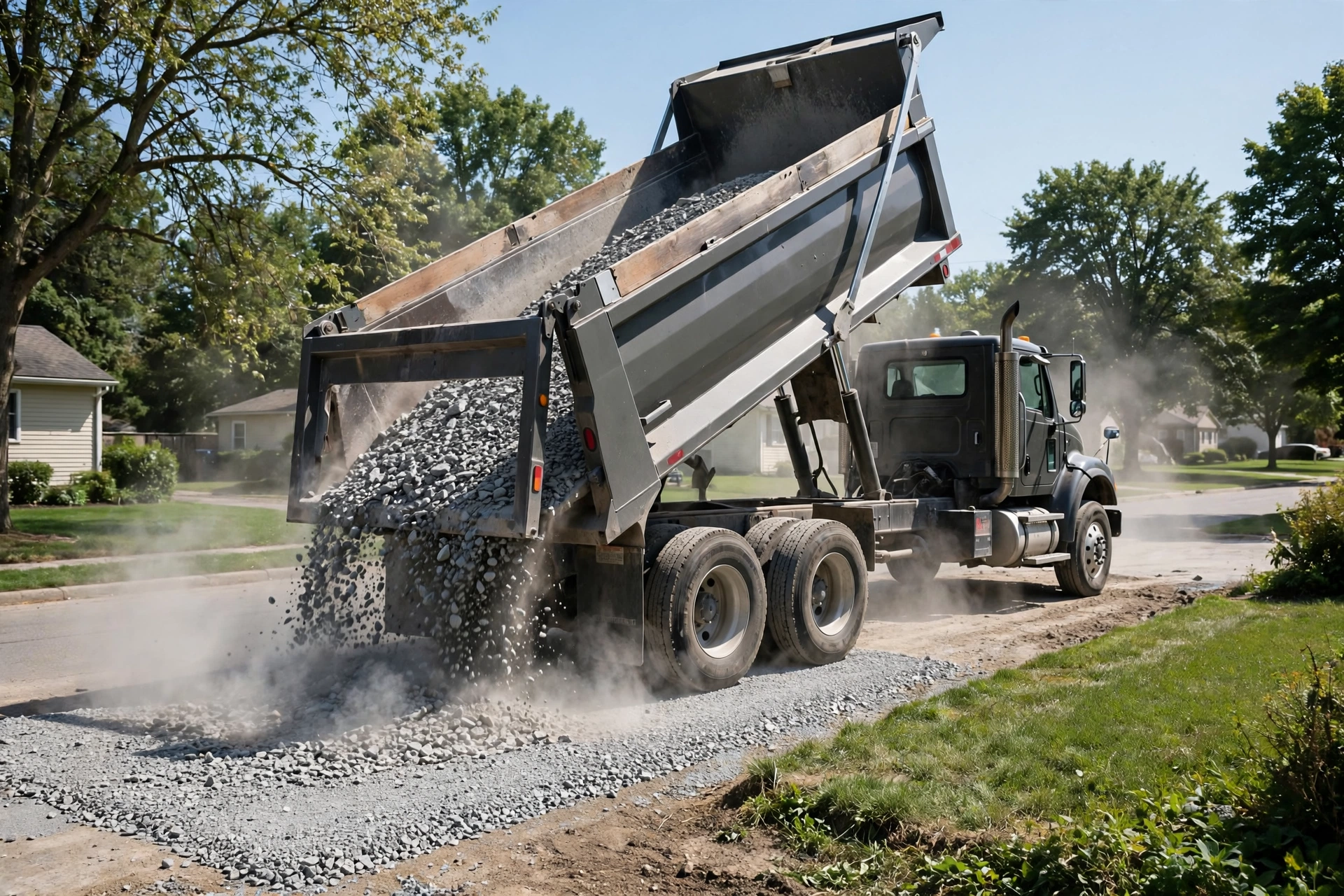
Short answer: the cost of a truck load of gravel is tons on the truck x price per ton + delivery. A 12-ton load at $20 to $45 per ton is $240 to $540, so about $290 to $740 delivered once you add $50 to $200 for the trip.
Truck sizes vary, and published figures differ between sources, so treat these as typical ranges and ask your supplier for their load size.
- Single-axle truck: roughly 6 to 10 tons.
- Tandem dump truck: roughly 10 to 16 tons. Most single-lane driveways need one to two loads.
- Tri-axle truck: up to about 20 tons, where the road and driveway can take the weight.
To get the number of loads, divide your total tons by the truck size and round up. If you cannot be home, ask the driver where to dump and keep the delivery area clear. Need a supplier? See where to buy gravel near me.
How much does one ton of gravel cover?
One cubic yard covers 324 divided by the depth in inches, in square feet. At 1.4 tons per cubic yard, one ton covers roughly:
| Depth | 1 cubic yard covers | 1 ton covers |
|---|---|---|
| 2 in | 162 sq ft | 116 sq ft |
| 3 in | 108 sq ft | 77 sq ft |
| 4 in | 81 sq ft | 58 sq ft |
| 6 in | 54 sq ft | 39 sq ft |
Compaction shrinks the layer, so spread slightly more than the finished depth.
Worked example: 12 x 50 ft driveway
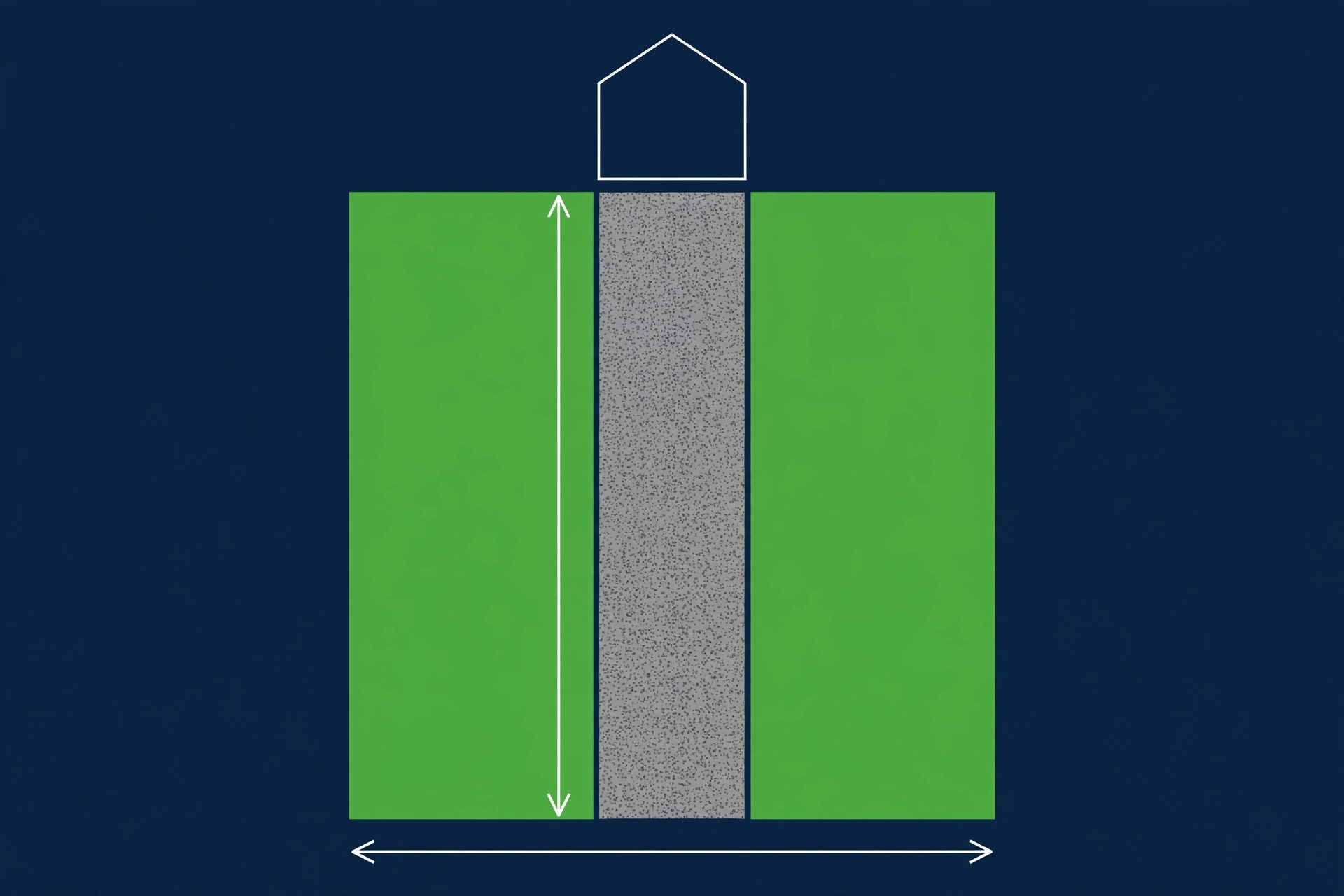
- Area: 12 x 50 = 600 sq ft.
- Base: 600 x 4 / 12 / 27 = 7.41 cubic yards. Add 10%: 8.15. At 1.5 tons per yard: 12.2 tons.
- Top: 600 x 2 / 12 / 27 = 3.70 cubic yards. Add 10%: 4.07. At 1.4 tons per yard: 5.7 tons.
- Total: 12.2 cubic yards, 17.9 tons, about two truckloads.
Heavy-duty version: 6 in base + 3 in top
Same 12 x 50 ft driveway for trucks or RVs:
| Layer | Depth | Cubic yards (with 10%) | Tons |
|---|---|---|---|
| Base (crusher run, 1.5 t/yd³) | 6 in | 12.22 | 18.3 |
| Top (#57, 1.4 t/yd³) | 3 in | 6.11 | 8.6 |
| Total | 9 in | 18.3 | 26.9 (about 3 truckloads) |
Common gravel driveway mistakes
- Skipping the base. Surface stone alone on soil leads to ruts and soft spots.
- Leaving topsoil in. Roots and grass make a spongy bed. Strip it first.
- No fabric on soft soil. Stone sinks into mud and you keep buying more.
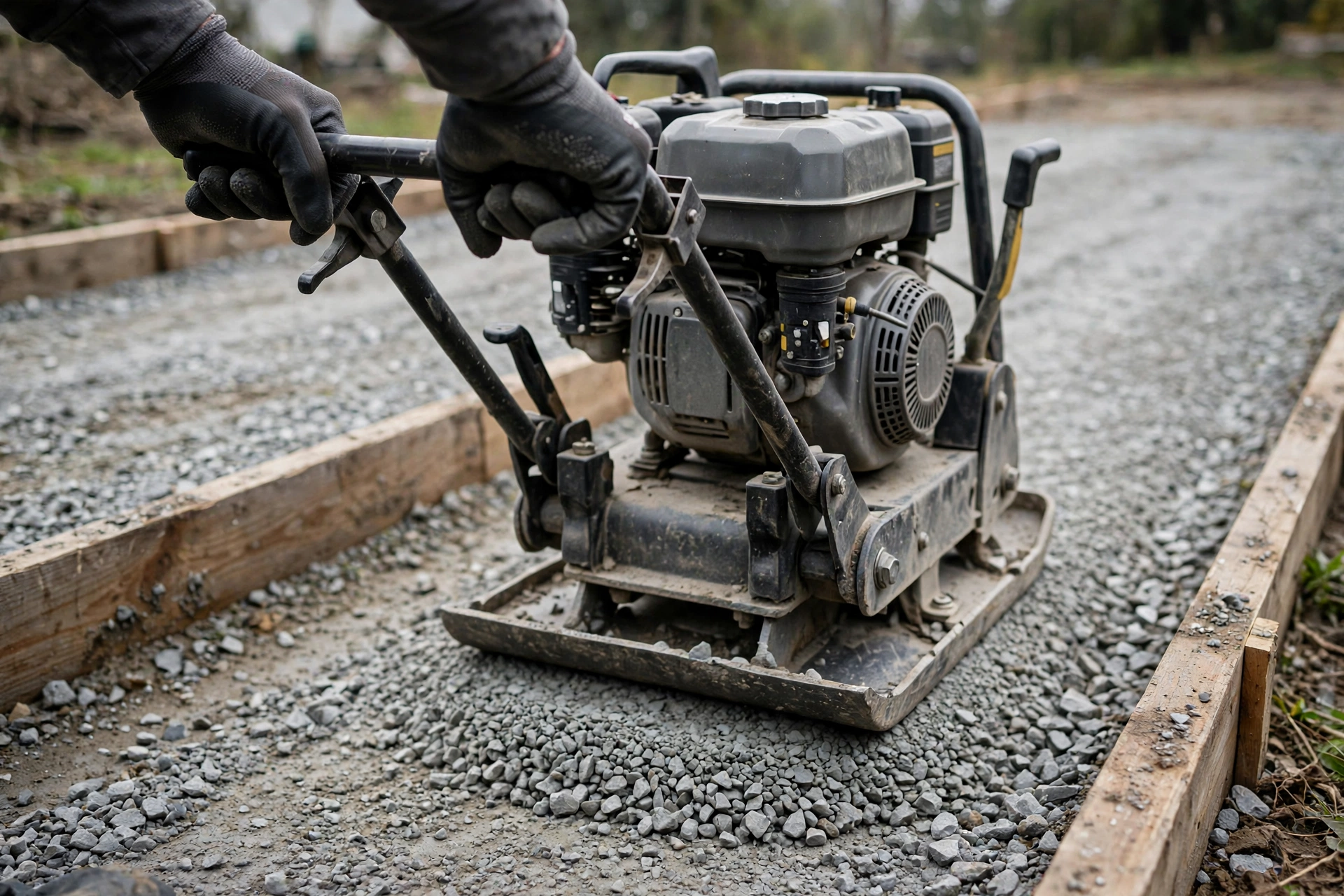
- Not compacting each layer. Compact base lifts of 3 to 4 inches with a plate compactor.
- Forgetting the extra. Ordering the exact volume leaves you short after compaction.
- No crown or drainage. Water pools and makes potholes. Aim for about 1/2 inch of fall per foot toward the edges. Standing water may need a French drain.
- No edging. Stone spreads into the lawn.
- Top layer too thick. More than 2 to 3 inches of loose stone shifts and slows cars.
Our guide how to lay a gravel driveway covers the build step by step.
Frequently asked questions
How much gravel do I need for a driveway?
How many tons of gravel do I need for a 12 x 50 driveway?
How much gravel do I need for a 100 ft driveway?
How much does a 100 ft gravel driveway cost?
How deep should a gravel driveway be?
What size gravel should I use for a driveway?
How many tons are in a cubic yard of gravel?
How much is a truckload of gravel?
How much extra gravel should I order?
Can I use pea gravel on a driveway?
Do I need fabric under a gravel driveway?
How we calculated this, and sources
Method. The calculator uses volume = length x width x compacted depth, converts to cubic yards (divide by 27), then multiplies by an assumed weight per cubic yard. Compaction and waste are added as a percentage of volume. Every example and table on this page uses the same formula, so the numbers match the calculator.
Weights. Published density tables put #57 stone at roughly 2,400 lb per cubic yard (1.2 tons), pea gravel at about 2,600 lb (1.3 tons) and dense graded aggregate at about 3,400 lb (1.7 tons). Supplier figures often run higher. The calculator defaults to the heavier end for #57 (1.4 tons) so you are less likely to under-order. Always confirm with your supplier.
Prices and truck sizes are typical ranges reported in cost and calculator guides we reviewed on 20 October 2026. Published figures differ, so we show ranges, and they vary by region and delivery distance. They are not quotes.
- CalculatorSoup: gravel calculator and density table
- Inch Calculator: gravel calculator and gravel driveway cost guide
- Hello Gravel: driveway calculator, materials and truck capacities
- Bob Vila, HomeGuide and LawnStarter: gravel driveway cost guides
- Eartheasy: gravel coverage and depth by project
- Bovee’s and PeaGravelCalculator: price ranges by material