

The Ultimate Gravel Depth Guide: How Deep Should You Go for 10 Different Projects?:
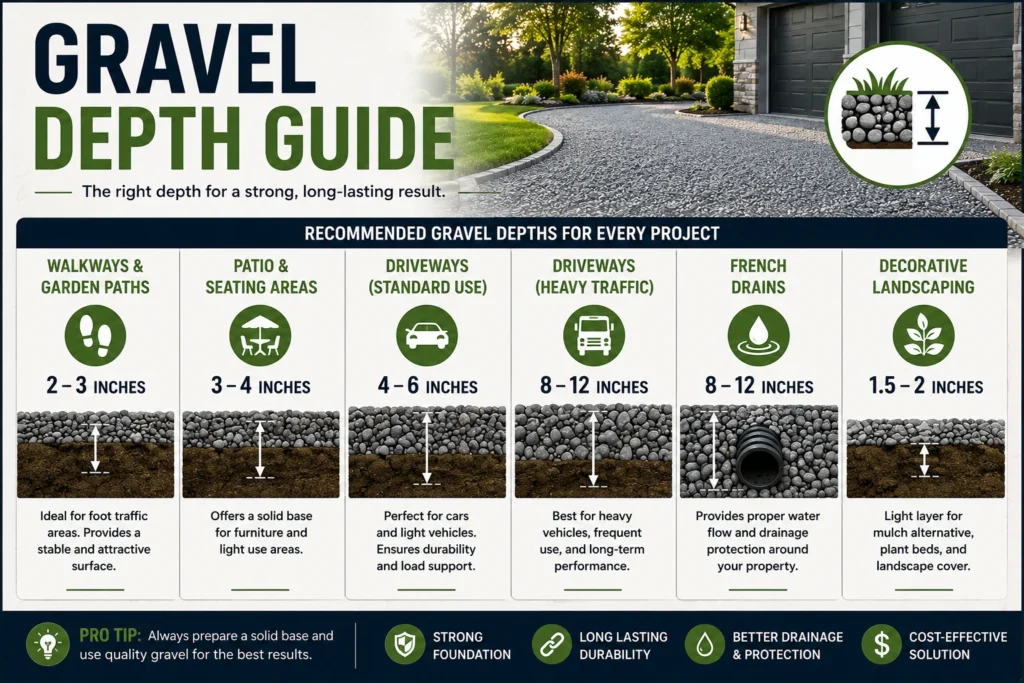
Choosing the right gravel depth is critical for the longevity, stability, and functionality of your project. This gravel depth guide covers everything you need to know.This comprehensive guide covers recommended depths for driveways, walkways, patios, French drains, and landscaping — so you get it right the first time.
Introduction
How deep should gravel be? It’s one of the most common questions homeowners and DIY enthusiasts ask. The answer depends on your specific project type, expected load, and ground conditions.
Too shallow and the gravel shifts, the membrane shows through, or the surface becomes unstable. Too deep and you waste money on unnecessary material, making the surface difficult to walk or drive on.
Getting the depth right is essential. Before you start, use our free gravel calculator to determine exactly how much gravel you need based on your chosen depth. This gravel depth calculator gives you instant estimates in cubic yards, tons, and total cost. This gravel depth guide covers everything you need to know.
Recommended Gravel Depth by Project Type – Complete Gravel Depth Guide:
| Project Type | Recommended Depth | Why This Depth |
|---|---|---|
| Walkways & Paths | 2–3 inches | Comfortable underfoot, stable for foot traffic |
| Patios & Garden Paths | 3–4 inches | Supports furniture and foot traffic |
| Driveways (standard) | 4–6 inches | Handles passenger vehicles |
| Driveways (heavy traffic) | 8–12 inches | Supports trucks and heavy loads |
| French Drains | 8–12 inches | Provides adequate drainage capacity |
| Decorative Landscaping | 1.5–2 inches | Sufficient for aesthetics and weed suppression |
| Shed Bases | 4–6 inches | Supports shed weight and prevents sinking |
| Parking Areas | 6–8 inches | Handles regular vehicle parking |
| Playgrounds | 3–4 inches | Safe and comfortable for children |
| Dog Runs | 2–3 inches | Comfortable for paws, good drainage |
Use this gravel depth guide to find the perfect depth for your project.
Detailed Gravel Depth Guide by Project Type
Driveways
Standard Depth: 4–6 inches
For passenger vehicles, 4 inches of compacted gravel on a well-prepared sub-base is sufficient, according to this gravel depth guide. For regular use, 6 inches provides extra stability.
| Vehicle Type | Recommended Depth |
|---|---|
| Cars, SUVs, Light trucks | 4–6 inches |
| Heavy vehicles (RVs, construction trucks) | 8–12 inches |
| Poor drainage area | 8–10 inches |
Structure:
- Sub-base: 6–8 inches of MOT Type 1 (compacted)
- Gravel top layer: 4–6 inches (compacted in 2-inch layers)
Pro Tip: For driveways, use angular crushed stone rather than rounded pea gravel. The interlocking edges create a stable surface that won’t shift under vehicle weight.
Walkways and Paths
Recommended Depth: 2–3 inches
For garden paths and walkways, 2–3 inches of gravel is sufficient, as recommended in this gravel depth guide. This depth is comfortable underfoot and provides good drainage.
| Use Case | Recommended Depth |
|---|---|
| Garden paths | 2 inches |
| Main walkways | 2–3 inches |
| Sloped paths | 3 inches |
Structure:
- Sub-base: Optional (2 inches if soil is soft)
- Gravel top layer: 2–3 inches
Pro Tip: Use pea gravel for walkways — its smooth, rounded stones feel softer underfoot and look more decorative.
Patios and Garden Paths
Recommended Depth: 3–4 inches
Patios experience foot traffic and may support furniture, so a slightly deeper depth is recommended in this gravel depth guide.
| Use Case | Recommended Depth |
|---|---|
| Light-use patios | 3 inches |
| Heavy-use patios | 4 inches |
| Under furniture | 4 inches |
Structure:
- Sub-base: 4–6 inches of compacted crushed stone
- Gravel top layer: 3–4 inches
Pro Tip: For a stable patio, compact the gravel in 2-inch layers using a plate compactor.
French Drains
Recommended Depth: 8–12 inches
French drains require deeper gravel to provide adequate drainage capacity, as explained in this gravel depth guide.
| Use Case | Recommended Depth |
|---|---|
| Residential drainage | 8–10 inches |
| Commercial drainage | 10–12 inches |
| Heavy rainfall areas | 10–12 inches |
Structure:
- Trench width: At least 6 inches
- Gravel depth: 8–12 inches
- Gravel type: Clean crushed stone (allows water to flow freely)
Pro Tip: Use clean, angular crushed stone for French drains. It allows water to flow freely and prevents clogging. For more detailed technical information, refer to the Mississippi State University Extension’s guide on French drains.
French Drain Installation Guide
Decorative Landscaping
Recommended Depth: 1.5–2 inches
For decorative purposes, a thin layer is sufficient. This depth prevents weeds while showcasing the decorative stones.
| Use Case | Recommended Depth |
|---|---|
| Flower beds | 1.5 inches |
| Garden borders | 1.5–2 inches |
| Xeriscaping | 2 inches |
Structure:
- Weed membrane: Always recommended
- Gravel top layer: 1.5–2 inches
Pro Tip: For deeper weed suppression, some homeowners use 3–4 inches. However, 1.5–2 inches is usually sufficient when combined with a weed membrane.
Pea Gravel vs Crushed Stone guide
Shed Bases
Recommended Depth: 4–6 inches
A shed base needs to support the weight of the structure and its contents.
| Use Case | Recommended Depth |
|---|---|
| Small garden shed | 4 inches |
| Large workshop shed | 6 inches |
| Heavy equipment shed | 6–8 inches |
Structure:
- Sub-base: 4–6 inches of compacted crusher run
- Gravel top layer: 4–6 inches (compacted)
- Edging: Metal, timber, or concrete
Pro Tip: Use crusher run (#21A) for shed bases. The fines bind together when compacted, creating a solid, stable foundation.
Parking Areas
Recommended Depth: 6–8 inches
Parking areas see frequent vehicle traffic, so a deeper depth is essential.
| Use Case | Recommended Depth |
|---|---|
| Light vehicles | 6 inches |
| Heavy vehicles | 8 inches |
| Commercial parking | 8–10 inches |
Structure:
- Sub-base: 8–10 inches of compacted MOT Type 1
- Gravel top layer: 6–8 inches (compacted)
Pro Tip: For commercial parking areas, consider gravel grids for extra stability.
Playgrounds
Recommended Depth: 3–4 inches
Playgrounds require a depth that absorbs falls while remaining clean and safe.
| Use Case | Recommended Depth |
|---|---|
| Home playground | 3 inches |
| Public playground | 4 inches |
Structure:
- Sub-base: Optional (if drainage poor)
- Gravel top layer: 3–4 inches
- Gravel type: Pea gravel (soft, rounded stones)
Pro Tip: Pea gravel is the safest and most comfortable option for playgrounds. Avoid crushed stone or angular gravel.
Dog Runs
Recommended Depth: 2–3 inches
Dog runs need a depth that is comfortable for paws and provides good drainage.
| Use Case | Recommended Depth |
|---|---|
| Small dog run | 2 inches |
| Large dog run | 3 inches |
Structure:
- Sub-base: Optional
- Gravel top layer: 2–3 inches
- Gravel type: Pea gravel or decomposed granite
Pro Tip: Use pea gravel for dog runs. It’s smooth on paws and drains well, preventing mud.
Why Gravel Depth Matters
Choosing the right depth isn’t just about aesthetics — it affects the longevity and functionality of your project.
| Problem | Cause | Solution |
|---|---|---|
| Gravel shifts or migrates | Too shallow / no compaction | Add 2-inch layers, compact properly |
| Weeds grow through | Too shallow / no membrane | Use weed membrane + 2-inch minimum depth |
| Water pooling | Incorrect slope / insufficient drainage | Ensure proper slope, use permeable gravel |
| Vehicle ruts | Too shallow / wrong gravel type | Use angular gravel, compact in layers |
| Sinking or settling | Insufficient sub-base | Add 4-6 inches of compacted sub-base |
Factors That Affect Gravel Depth
1. Soil Type
- Clay soil: Requires deeper sub-base and gravel (poor drainage)
- Sandy soil: Good drainage, may require shallower depth
- Soft/compacted soil: Requires deeper excavation
2. Water Table
- High water table: Deeper gravel for drainage
- Low water table: Standard depth works fine
3. Load Bearing
- Foot traffic: 2-4 inches sufficient
- Vehicle traffic: 4-12 inches needed
- Heavy equipment: 8-12 inches minimum
4. Climate
- Heavy rainfall: Deeper gravel + better drainage
- Dry climate: Standard depth sufficient
How Much Gravel Do You Need Based on Depth?
Our gravel calculator helps you estimate exactly how much gravel you need based on your project dimensions and chosen depth.
| Depth | Square Feet per Ton | Square Feet per Cubic Yard |
|---|---|---|
| 1.5 inches | ~130 sq ft | ~215 sq ft |
| 2 inches | ~100 sq ft | ~160 sq ft |
| 3 inches | ~65 sq ft | ~108 sq ft |
| 4 inches | ~50 sq ft | ~80 sq ft |
| 6 inches | ~35 sq ft | ~54 sq ft |
| 8 inches | ~25 sq ft | ~40 sq ft |
| 10 inches | ~20 sq ft | ~32 sq ft |
| 12 inches | ~17 sq ft | ~27 sq ft |
Use our gravel quantity calculator to get exact estimates for your specific project. Refer to this gravel depth guide for accurate recommendations
Frequently Asked Questions About This Gravel Depth Guide:
Still unsure? This gravel depth guide answers all your questions.
How deep should gravel be for a patio?
For patios, 3-4 inches of gravel is recommended. This supports foot traffic, furniture, and provides stability.
How deep should gravel be for a French drain?
French drains require 8-12 inches of clean crushed stone. The depth ensures adequate drainage capacity and prevents clogging.
How deep should gravel be for landscaping?
For decorative landscaping, 1.5-2 inches is usually sufficient. This depth prevents weeds while showcasing the decorative stones.
How deep should gravel be for a shed base?
For shed bases, 4-6 inches of gravel on a compacted sub-base is recommended. This supports the shed weight and prevents sinking.
How deep should gravel be for a playground?
Playgrounds require 3-4 inches of pea gravel. This depth absorbs falls and provides a safe, comfortable surface.
How deep should gravel be for a dog run?
For dog runs, 2-3 inches of pea gravel or decomposed granite provides comfort for paws and good drainage.
How deep should gravel be under concrete?
Gravel under concrete should be at least 4-6 inches, depending on the load. This provides drainage and prevents frost heave.
What happens if gravel is too shallow?
Shallow gravel (< 2 inches) leads to:
Membrane showing through
Weeds growing through
Shifting and displacement
Unstable, uneven surface
Rapid deterioration
What happens if gravel is too deep?
Too much gravel (> 6 inches for foot traffic) can be:
Difficult and expensive to walk or drive on
Unstable (especially rounded gravel)
Wasteful and expensive
Hard to compact properly
Related Tools & Resources
- Gravel Calculator — Get exact estimates for your project
- Gravel Cost Per Ton Guide — Complete pricing breakdown
- Pea Gravel vs Crushed Stone — Which is better for your project?
- How to Lay a Gravel Driveway — Step-by-step installation guide
- French Drain Installation Guide — Step-by-step drainage solution
- Cubic Feet Calculator Guide
- Pea Gravel Calculator Guide
Use Our Free Gravel Calculator
Planning your project? Use our free gravel calculator to estimate exactly how much gravel you need based on your project dimensions and chosen depth. This online gravel estimator gives you instant results in cubic yards, tons, and total cost. Bookmark this gravel depth guide for your next project.
Simply enter your dimensions, select gravel type, add waste factor, and get accurate estimates in seconds. Plan your project with confidence and get the depth right the first time. Bookmark this gravel depth guide for your next landscaping or construction project.
[Launch Gravel Calculator] ← Click to use our free tool